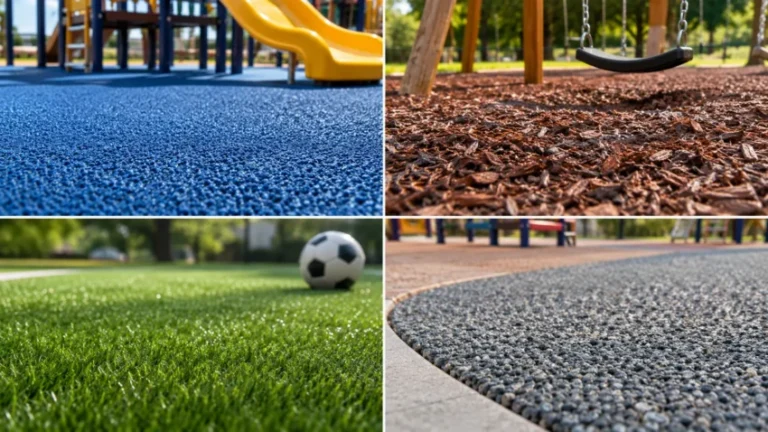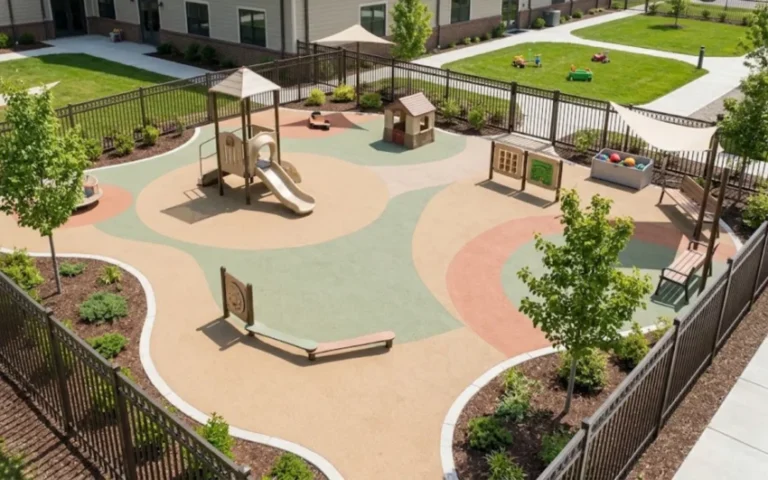
Choosing the right playground surface is an important decision for daycare centers and early-learning facilities. Younger children spend time crawling, exploring, and playing close to the ground, making safety, cleanliness, and accessibility especially important.
From poured-in-place rubber to artificial turf and bonded rubber mulch, different playground surfaces offer different advantages. Understanding how these materials compare can help daycare owners select a surface that supports daily play, meets applicable requirements, and fits their maintenance needs.
What Are the Best Playground Surfacing Options for Daycare Centers?
Daycare playgrounds often experience frequent use in relatively small spaces, making durability, cleaning, and age-appropriate safety important considerations. The right surface depends on the children’s ages, equipment fall heights, accessibility needs, and available maintenance resources.
Several outdoor playground surfacing options are commonly considered for daycare facilities.
| Playground Surface | Main Considerations for Daycares |
| Poured-in-place rubber | Continuous surface; evaluate fall protection, cleaning, and maintenance |
| Bonded rubber mulch | Bound rubber material; inspect for wear and loose pieces |
| Artificial playground turf | Consider cushioning system, infill, drainage, and cleaning |
| Loose-fill materials | Require monitoring of depth, displacement, and routine upkeep |
Poured-in-place rubber provides a continuous surface that may be easier to navigate than loose materials when appropriately designed and installed. Bonded rubber mulch and artificial playground turf offer additional options, each with different installation and maintenance considerations.
Loose-fill materials, such as engineered wood fiber, may have lower initial installation costs but require ongoing attention to material depth and displacement. For younger children, facilities should also consider the potential for loose materials to be picked up or placed in the mouth.
Some facilities may use Flexi-Pave for pathways or other designated areas. However, its suitability within playground equipment use zones must be verified against applicable impact-protection requirements.
For a broader overview, explore Custom Park Surfacing’s playground surface options guide.
How Do Fall Protection Requirements Apply to Daycare Playgrounds?
Fall protection is one of the most important considerations when selecting daycare playground surfacing. The appropriate surface system depends on the playground equipment’s fall height and the impact protection required within its use zones.
The ASTM F1292 standard establishes impact-attenuation performance requirements for playground surfacing. Facility owners should request documentation showing that the selected surface system meets the necessary performance requirements for their equipment.
The U.S. Consumer Product Safety Commission’s Public Playground Safety Handbook also provides guidance on playground safety, equipment, and protective surfacing.
Importantly, no playground surface should be considered suitable based on material type alone. Thickness, installation, equipment height, and ongoing maintenance can all affect performance.
Licensing and playground safety requirements may also vary by state and facility type. Daycare operators should confirm applicable regulations with their licensing authority before selecting or installing a surface.
Custom Park Surfacing provides additional information about playground fall zone requirements in Maryland and Florida.
How Should Daycare Playground Surfaces Be Cleaned and Maintained?
Daycare playground surfaces experience frequent use, making regular cleaning and maintenance important for keeping outdoor play areas in appropriate condition.
Spills, food, dirt, leaves, and other debris can accumulate on playground surfaces. Cleaning requirements vary depending on the material, so facilities should follow manufacturer-approved methods and products.
The federal Caring for Our Children Basics guidance recommends daily inspections of indoor and outdoor play areas to identify hazards and evaluate surface conditions.
Facility staff should routinely check for damaged areas, loose materials, standing water, and other potential concerns. Cleaning procedures should also account for spills, animal waste, and other contamination that may occur in outdoor childcare environments.
For additional guidance, explore Custom Park Surfacing’s article on how to clean a rubber playground surface.
How Do Accessibility, Drainage, and Budget Affect Surface Selection?
Accessibility is an important consideration for daycare playgrounds serving children with different mobility needs. The selected surface and surrounding routes should provide appropriate firmness, stability, and transitions. The U.S. Access Board provides guidance on accessible playground surfaces, while Custom Park Surfacing’s ADA-compliant playground surfacing guide offers additional information.
Drainage also affects playground usability and maintenance. Areas that retain water may be harder to clean and can limit outdoor play after rainfall. The surface system, underlying base, and site grading should work together to manage water appropriately.
Budget decisions should consider more than installation costs. Ongoing cleaning, maintenance, repairs, and eventual replacement can affect the long-term cost of a playground surface. Custom Park Surfacing’s school playground surfacing budget guide discusses planning considerations that may also be helpful for childcare facilities.
What Should Daycare Owners Consider Before Choosing a Playground Surface?
Before requesting quotes or selecting a playground surface, daycare owners should review their facility’s needs and confirm any licensing requirements.
The National Database of Child Care Licensing Regulations can help operators locate the appropriate state licensing agency and regulations.
When evaluating playground surfacing options, consider the following questions:
- Licensing requirements: Which playground safety, surface, and fall-zone requirements apply to your daycare and the ages you serve?
- Equipment and play area: What are the playground dimensions, equipment fall heights, and existing site conditions?
- Accessibility: How will children with different mobility needs navigate the playground and surrounding routes?
- Drainage: Does the site experience standing water, uneven grading, or other drainage concerns?
- Maintenance: What cleaning procedures, inspections, and repairs will the selected material require?
- Installation and warranty: What product documentation, installation requirements, warranty terms, and maintenance instructions will the installer provide?
Documenting these details before requesting estimates can help daycare owners compare surfacing proposals more effectively.
It’s also important to ask prospective installers for manufacturer specifications and relevant performance documentation rather than relying on general claims about safety or durability.
Find the Right Playground Surfacing for Your Daycare Center
Choosing daycare playground surfacing involves balancing fall protection, accessibility, cleaning, drainage, and long-term maintenance. Understanding the available materials and confirming applicable safety requirements can help daycare owners make informed decisions about their outdoor play spaces.
Whether you’re updating an existing playground or planning a new daycare facility, contact Custom Park Surfacing to discuss your project and explore suitable playground surfacing options.