School districts can plan a playground surfacing budget by working through a structured set of planning inputs: existing site conditions, the type of equipment and expected use, surface material selection, site preparation and drainage, design specifications, access logistics and project phasing, whether to include testing and documentation, a contingency reserve, and long-term lifecycle considerations. Each of these factors can influence the total project cost, and a budget that does not account for them may need significant revision once site-specific conditions are evaluated.
Facility directors and school business officials can approach playground surfacing as a site-specific planning item. Two playgrounds within the same district may present different preparation questions based on the condition of the existing ground, the equipment layout, and how the space is used day to day. This post outlines a planning framework that helps a school district organize information for a project budget.
Key Takeaways
- A playground surfacing budget draws on multiple planning inputs, not just a square-foot price.
- Existing site conditions and drainage are useful items to evaluate when developing a project scope.
- Equipment layout and expected use are useful inputs for the surfacing conversation.
- A site review can add context that a general pricing page cannot show.
- Discuss a contingency allowance and long-term renewal considerations with the district’s planning team.
What Goes Into a Playground Surfacing Budget?
A school district’s surfacing budget has several core inputs. Any one of them can shift the final number, and skipping any of them produces a budget that may need revision later. The planning inputs include:
- Existing site conditions. What is on the ground now? Grass, asphalt, compacted dirt, or an old failing surface? Different starting points call for different preparation work, and the effort required for removal and disposal of existing material can be a substantial part of the project scope.
- Equipment type and use intensity. The surfacing under a single play structure may involve different scope and material depth than the surfacing beneath a larger multi-station setup or a high-traffic path between activity areas. Confirming what is installed at each playground is an early planning step.
- Surface material selection. Different surface materials carry different installation methods and maintenance profiles. The choice is not strictly about upfront cost; it is about matching the material to the use case and the district’s maintenance capacity. A site review and conversation with a qualified installer can help a district evaluate which surface types are suitable for a given playground.
- Site preparation and drainage. Grading, compaction, base work, and drainage observations can all be part of the site-preparation conversation. A planning review can record how water moves across the site and what further evaluation may be useful.
- Design preferences. Color choices, patterns, game markings, logos, and borders are useful to identify early so the district can ask how they affect the proposed scope.
- Access and phasing. Record the available access path for people, equipment, and materials, as well as any school-calendar or operating constraints the team wants bidders to understand.
- Testing and documentation. Discuss whether post-installation testing or documentation is relevant to the project, who would provide it, and how it would appear in the budget.
- Contingency reserve. Site work can reveal conditions that were not apparent in an initial review. The district can discuss an appropriate contingency allowance with its financial and project advisors.
- Lifecycle considerations. Ask the manufacturer and installer about the care information, condition-monitoring approach, and renewal considerations associated with the selected system.
These inputs are connected. A site review may raise questions about drainage, material selection, equipment information, and access at the same time. Treat the budget as an interconnected set of scope decisions rather than a list of isolated line items. For related cost context, see our breakdown of how much poured-in-place rubber playground surfacing costs.
Why Do Existing Site Conditions Drive the Budget?
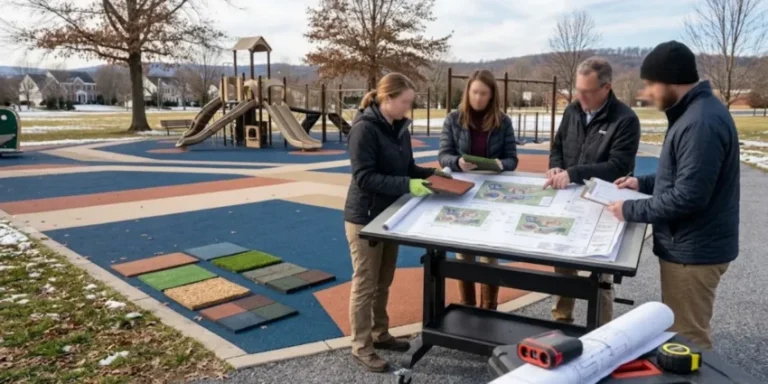
The ground underneath a playground is an important part of a surfacing budget. Two sites with similar measured areas may call for different conversations because of their existing surfaces, grades, drainage observations, and available access. A site review helps document those variables before the team selects a system or develops a project estimate.
A district evaluating multiple playground projects can document each site with its contractor or design professional. Questions for the walk-through include: What existing material is present? How does water behave after rain? Are there visible access, utility, root, or grade considerations? Which observations need a technical review? This record gives the planning team a shared starting point. The CPSC’s Public Playground Safety Handbook is a general safety resource that discusses site selection and surfacing considerations; it does not prescribe a budgeting method.
How Does Playground Equipment Affect Surfacing Requirements?
Equipment layout is a useful input when estimating the surfaced area. Record the equipment type, manufacturer information, height information, and the boundaries shown in the project documents. For reference, the CPSC Public Playground Safety Handbook discusses use zones and surfacing in the context of general playground safety. Technical and local-code advisors can help identify which information applies to a particular project.
Beyond the equipment itself, the layout of the playground affects how the team describes the surfaced area. If the site has distinct activity zones, the district can ask its advisors whether a phased approach is practical within its own operating and procurement process. The equipment inventory gives the team a starting point for discussing area, material, and project documentation. For related cost context, our page on poured in place rubber cost identifies factors commonly discussed in pricing conversations.
What Should a Planning Checklist Cover Before Bidding?
A written record of known site conditions gives a district a useful basis for discussing a playground surfacing project with its procurement, legal, and technical advisors. The table below is a planning template a facility director or project lead can use to organize information before a solicitation is drafted.
| Planning Step | What to Document | Planning Question |
|---|---|---|
| 1. Inventory existing playgrounds | Record each playground’s location, current surface condition, approximate area, equipment information, and project intent. | What does the district know about the current condition and project intent at each site? |
| 2. Walk each site | Record visible drainage patterns, grade observations, access paths, known utilities, nearby trees, and edge conditions. | Which existing conditions need further evaluation before the scope is finalized? |
| 3. Confirm surface material choice per site | Record the surface-system options being considered and the questions the team wants to resolve with a qualified provider. | Which surface-system questions need to be resolved for this site? |
| 4. Calculate total surface area and depth | Collect the area, equipment, route, and design information that the project’s technical advisors identify as relevant. | What information do the project documents provide about the planned surface area? |
| 5. Identify design elements | Record colors, patterns, markings, borders, and route considerations the team wants to discuss. | Which design preferences need to appear in the project discussion? |
| 6. Plan access and phasing | Record site access, operating, and calendar considerations that could affect the project discussion. | What access, operating, and calendar constraints should the district discuss with its advisors? |
| 7. Include testing and documentation | Record the testing and documentation questions the district wants to discuss with its advisors. | Which verification and documentation items does the district want to discuss for this project? |
| 8. Build a contingency line | Record the district’s contingency assumption and the reasoning it wants to use. | How will the district document its contingency assumption? |
| 9. Estimate lifecycle replacement | Record the long-term care and renewal questions the team wants to discuss with the manufacturer and installer. | What future condition-monitoring and renewal questions should be included in the plan? |
Use this checklist as a record of questions and known conditions to review before a procurement document is written. For projects involving multiple activities or parties, surfacing installation project management provides a starting point for discussing project coordination with Custom Park Surfacing.
Why Do Actual Project Estimates Need a Site Review?
A square-foot price can be a useful conversation starter, but it does not describe every site condition or project decision. Two playgrounds with similar measured areas can still prompt different questions about preparation, drainage, access, and documentation. Treat general pricing information as context while project-specific details are being reviewed.
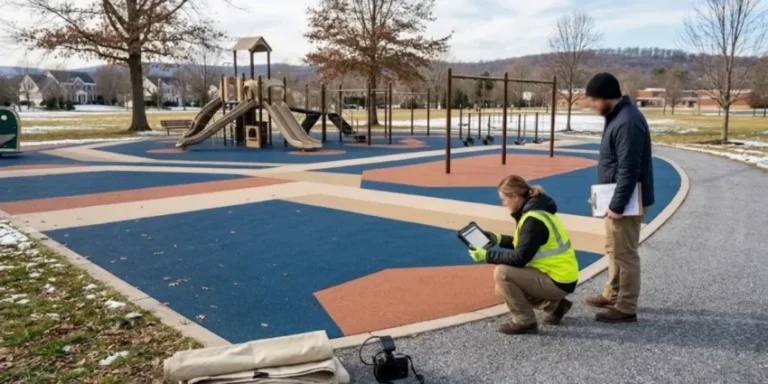
A site review gives a team information that a remote conversation cannot show. It can document the existing surface, drainage observations, access routes, nearby trees, known utilities, and the relationship between equipment and the planned surface area. The district can label early numbers as preliminary while project-specific information is being reviewed.
For reference on material quantities before a site visit, the rubber mulch calculator can provide a starting point for estimating volume needs based on square footage and desired depth, though it does not account for the site-specific factors discussed above.
Frequently Asked Questions About School Playground Surfacing Budgets
How can a school district begin planning a playground surfacing project?
Begin by identifying the intended project window and collecting the site, equipment, and operating information the district already has. The planning team can then decide which project, procurement, financial, and technical review steps are appropriate for its own process.
Can a district budget for multiple playgrounds in a single contract?
A district can discuss whether to address multiple sites together or separately with its procurement and project advisors. In either case, recording site-specific information helps the team understand the distinct questions associated with each location.
What should a district do if the budget comes in higher than available funding?
Review the available scope, timing, and design options with the district’s planning team and qualified technical advisors. The team can decide whether to revise the project approach, schedule, or design preferences while retaining the project criteria it considers important.
Does the CPSC handbook tell districts how to budget?
No. The CPSC Public Playground Safety Handbook is a general playground-safety resource. It is not a budgeting or procurement manual. A district can review it with the appropriate advisors while conducting its separate financial planning work.
Is ASTM F1292 testing required for every school playground?
ASTM F1292 describes an impact-attenuation specification for surfacing materials within playground-equipment use zones. It does not determine what documentation a specific owner needs. A district can consult its legal, insurance, technical, and local-code advisors about project-specific questions.
How often should a school district budget for surface replacement?
Long-term condition can depend on the selected system, site context, use, and care. Ask the manufacturer and installer what care information and future renewal considerations they can provide for the specific proposed system. The district can then decide how to reflect those considerations in its planning.
What role does drainage play in the budget?
Drainage observations can affect the site-preparation discussion. If water behavior is a concern at a site, record the observations and ask the project team whether further evaluation or a separate scope item is appropriate.
Should the budget include separate line items for design and testing?
Design and testing can be useful line items to discuss separately because they may involve different information and deliverables. The district can decide, with its advisors, how to organize those items in its own budget format.
What Are the Next Steps for Your District?
Building a playground surfacing budget can start with a site-by-site record, a clear description of the decision questions, and a project scope reviewed by the appropriate team members. General pricing information can support that discussion, while site-specific information provides additional context.
If your district is beginning the planning process for a playground surfacing project, contact us to discuss a site review and a scope of work that matches your facilities and your budget cycle.