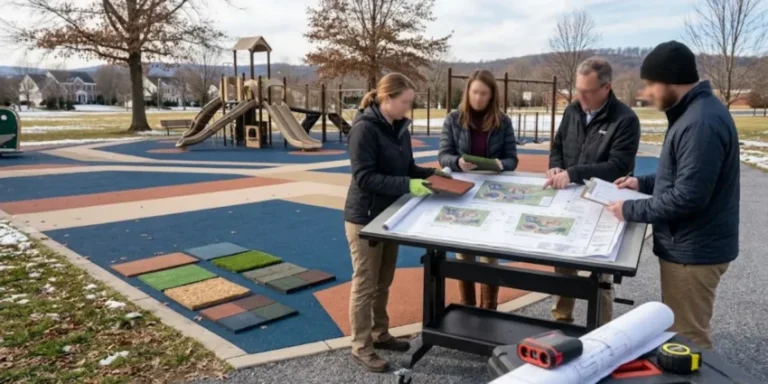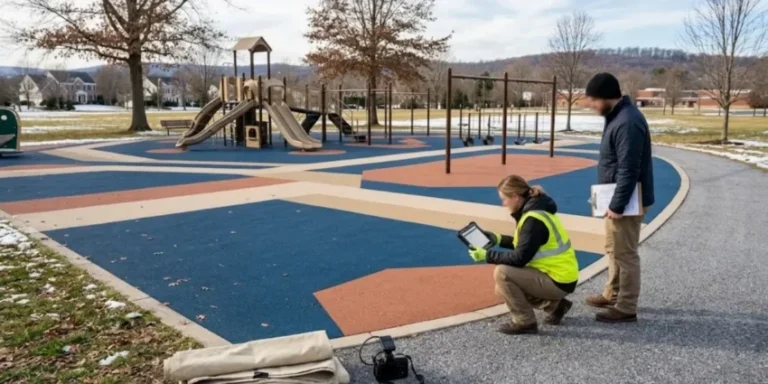
Winter preparation for playground surfacing can include a documented walk-through, debris and drainage observations, a review of the manufacturer information for each installed surface system, and a plan for winter access and spring reopening. For facility managers and maintenance teams, the goal is to identify questions while conditions still allow inspection and follow-up. For more on the surface types discussed throughout this guide, see Custom Park Surfacing’s playground surfacing options.
The period before freezing weather arrives is an important planning window. Once snow and ice are on the ground, access may become limited and inspections and repairs become more difficult. This guide walks through what to inspect, what questions to ask your surface manufacturer or installer about each common surface type before winter sets in, what to consider for snow removal, and how to plan for a safe spring reopening. It is written for school facility managers, park department maintenance leads, and anyone responsible for playground safety across seasons.
Key Takeaways
- Plan the walk-through far enough ahead to leave time for follow-up questions before winter weather limits site access.
- Ask the surface manufacturer how standing water and freeze-thaw conditions may affect the installed system, and record drainage observations for follow-up.
- Review manufacturer information for each surface system on the site because winter-care guidance can differ by system.
- Ask the surface provider which tools and products are appropriate for the installed system before snow arrives.
- Document conditions with dated photos. Records from fall give your team a baseline to compare against when inspecting the same surface in spring.
What Should a Pre-Winter Playground Surface Inspection Cover?
A pre-winter walk-through can document visible conditions across the playground surface, including seams, edges, high-use zones, and areas where water collects. A consistent route around the site helps the team compare observations over time.
Look for visible changes in surface condition: cracks in poured-in-place rubber near equipment posts and along border transitions, areas where bonded rubber mulch has separated or thinned in high-traffic landing zones, seams on artificial turf that show lifting or separation, and any loose aggregate or surface wear on Flexi-Pave. Note anything that differs from the last inspection.
Pay attention to edges and transitions. Surface edges that lift or separate can let water underneath. Ask your manufacturer whether water intrusion at edges is a concern for your specific system and what conditions to watch for. Check that border transitions between different surface types, or between surfacing and grass, are still flush and secure.
Include drainage in the same walk-through and note areas where water pools after rain. Share those observations with the surface manufacturer or a qualified site professional to understand whether further evaluation is appropriate for the installed system.
How Does Winter Debris and Drainage Affect Playground Surfaces?
Leaves, pine needles, and other organic debris can obscure the surface and drainage areas. Record where debris accumulates, then review the manufacturer’s care information and the site’s maintenance procedures before selecting a cleaning approach.
A walk-through after rain can show where water remains on or near the play area. Record drain locations and observed pooling so the facilities team can decide, with the appropriate site professionals, whether follow-up is needed.
For systems described by their manufacturers as permeable, ask how debris may affect the system’s intended drainage behavior and what care method is appropriate. For related maintenance context, see our guide on how to clean a rubber playground surface.
What Should Facility Managers Know About Winter and Poured-in-Place Rubber?
Poured-in-place rubber (PIP) is an impact-absorbing surface system. Manufacturers may have specific guidance about cold-weather performance, water intrusion through cracks or separated seams, and freeze-thaw behavior. Ask your PIP manufacturer or installer: what should our team look for during a pre-winter inspection? Under what conditions should we schedule repairs before freezing weather?
Before winter, inspect every seam where PIP meets equipment posts, border curbing, or another surface type. Even hairline cracks deserve attention. If your inspection identifies separation or cracking, contact the manufacturer or your installer for repair guidance.
Confirm with the manufacturer whether sites in climates that rarely see extended freezes but experience occasional overnight frost still need any specific winter preparation steps. Manufacturer care instructions vary, so confirm any winter-specific guidance from the system manufacturer before acting.
How Should Rubber Mulch Surfaces Be Handled Before Winter?
For rubber mulch systems, include surface depth and material distribution in the walk-through. Ask the manufacturer or installer how the current condition should be compared with the project information and equipment documentation.
For bonded rubber mulch, record any visible changes in the bonded surface and ask the manufacturer about cold-weather care, repair options, and any conditions that warrant follow-up.
For loose-fill mulch, record the condition of containment borders and edging, then discuss any visible changes with the system provider. For broader project-planning context, see surfacing installation and project management.
What Winter Preparation Applies to Artificial Turf Playgrounds?
For artificial turf, include infill, drainage observations, and seam condition in the seasonal walk-through. Record areas that appear different from the rest of the surface and ask the manufacturer or installer how they should be evaluated.
Ask the manufacturer how to evaluate drainage behavior and which cleaning methods and tools are appropriate for the specific turf system. Use the project’s product information rather than generic instructions.
Inspect every seam between turf sections and flag any that show separation. Document your findings for your own records and for any follow-up discussions with the installer or manufacturer. For a related look at how installation timing affects planning, see our playground surfacing installation timeline guide.
How Does Flexi-Pave Perform in Winter Conditions?
Flexi-Pave is a permeable surface system. Ask the manufacturer about its drainage characteristics in winter conditions and whether its open-pore structure reduces ice formation compared to non-permeable surfaces. Permeability can be an advantage in freeze-thaw conditions, but it depends on the pores remaining unclogged.
Before winter, record any accumulated sediment, leaf debris, or fine grit visible on the surface. Confirm the appropriate cleaning approach with the manufacturer, including any applicable equipment or method limitations for the installation.
For information about Flexi-Pave installations and project examples, see Custom Park’s playground surface installation page. As always, defer to manufacturer guidance for winter-specific care.
What Is the Right Approach to Snow Removal on Playground Surfaces?
Snow removal planning for a playground surface starts with the manufacturer’s guidance for the installed system. The surface and the surrounding site can differ from adjacent paved areas, so the facilities team can document the intended approach before winter weather arrives.
Key questions to ask your surface manufacturer or installer before winter:
- Which snow removal tools are approved for this surface system?
- Are there any de-icing products that are safe for this surface?
- What ice management approach do you recommend if ice has formed on the surface?
- Should snowblower or plow operators be given specific instructions about the playground perimeter to avoid accidental edge damage?
- If the playground will not be used during winter months, is leaving snow in place the safest approach for this surface?
Confirming these details with the manufacturer before the first snowfall gives the facilities team a documented basis for its seasonal plan. If the playground is closed for the season, ask whether marking the surface perimeter or leaving snow undisturbed is appropriate for that system.
How can facility managers use a winter-preparation decision table?
| Surface Type | Consider Asking Manufacturer About | Pre-Winter Action | Snow Removal: Confirm With Manufacturer |
|---|---|---|---|
| Poured-in-Place Rubber | Water intrusion through cracks; freeze-thaw behavior | Document seams and visible changes; ask about appropriate follow-up | Approved tools; approved de-icing products |
| Bonded Rubber Mulch | Bond performance in cold; water in un-bonded gaps | Document bond condition and material distribution | Approved snow removal methods; ice management approach |
| Loose Rubber Mulch | Displacement; cold-weather impact performance | Document depth and border condition for provider review | Method to avoid removing mulch with snow |
| Artificial Turf | Infill compaction in cold; seam performance in freeze-thaw | Document infill and seam condition; ask about care steps | Approved tools; approved de-icing products if any |
| Flexi-Pave | Pore clogging; ice formation on surface | Document visible debris and drainage observations | Approved tools; approved cleaning methods |
Why Should Facility Managers Document Winter Preparation and Damage?
Dated photographs and written inspection notes create a useful seasonal record. They give the maintenance team a baseline for spring comparison and provide concrete material for any follow-up discussion with the manufacturer, installer, or qualified inspector.
Consider wide photographs of the full playground as well as close views of specific observations. The record can include date, recent weather, location, and any questions for follow-up. Teams that use a maintenance system can attach the record to the relevant asset if that fits their internal process.
The CPSC Public Playground Safety Handbook describes regular inspections and maintenance records as part of a playground safety program. While the handbook does not prescribe winter-specific protocols, its general guidance on documented inspection routines supports the same practice.
How Should Facilities Plan for Spring Playground Reopening?
Spring reopening can begin with a walk-through that mirrors the fall review. Compare current observations with the fall record, then bring visible changes to the manufacturer, installer, or a qualified inspector for project-specific guidance.
Use the project documentation and the owner’s safety procedures to identify areas that warrant priority review, including areas around equipment, routes, and transitions. ASTM F1292 describes impact-attenuation testing for surfacing materials within playground-equipment use zones. A qualified inspector or surface provider can advise whether further evaluation is appropriate for the site.
Spring is also a time to revisit any follow-up items recorded in the fall. For broader project-planning context, see our installation timeline guide.
Frequently Asked Questions
How early should winter preparation start?
Start early enough to complete inspections, clear debris, and arrange any needed repairs before freezing weather typically arrives in your area. Check with your surface manufacturer about any time-sensitive steps that require specific temperature or weather conditions. Rushing through an inspection right before a forecasted freeze means any problems you find may not get addressed in time.
Can playground surfaces be installed in winter?
Some surface types may have temperature or moisture requirements for installation. The manufacturer’s product data sheet controls what is possible and under what conditions. Consult the manufacturer or your installer before scheduling winter work, and confirm that weather conditions during and after installation will meet the product specifications.
What temperature is too cold for playground surface work?
There is no single temperature threshold that applies to all surface types. Each surface system has its own manufacturer-specified application and curing requirements. Consult the technical data sheet for the exact system installed at your site rather than relying on general guidance.
Do I need to cover playground surfaces in winter?
Whether playground surfaces should be covered in winter depends on the specific system. Ask your surface manufacturer for guidance on covering. If covering is recommended, they can also advise on proper materials and methods. If the manufacturer does not recommend covering, focus your preparation effort on drainage and inspection.
How do I know if freeze-thaw cycles damaged the surface?
Compare spring conditions to your pre-winter inspection notes and photos. Look for changes: cracks that were not present before, seams that have widened or separated, areas where the surface appears raised or uneven, and new drainage issues. If you have concerns about impact attenuation, your surface provider or a qualified inspector can advise on next steps.
Can our maintenance team do this or should we hire a professional?
An in-house team can record observations and follow its established maintenance procedures. For surface changes, ask the manufacturer or installer whether a trained contractor, specified materials, or a particular process is appropriate for the installed system.
What is a frequently overlooked winter preparation step?
Drainage observations are useful because they connect the visible surface to the larger site. A walk-through during or after rain can help a team record where water collects or moves, then decide with the appropriate site professionals whether follow-up is needed.
For help evaluating your playground surfaces before winter or planning repairs for spring, contact Custom Park Surfacing to schedule an assessment.