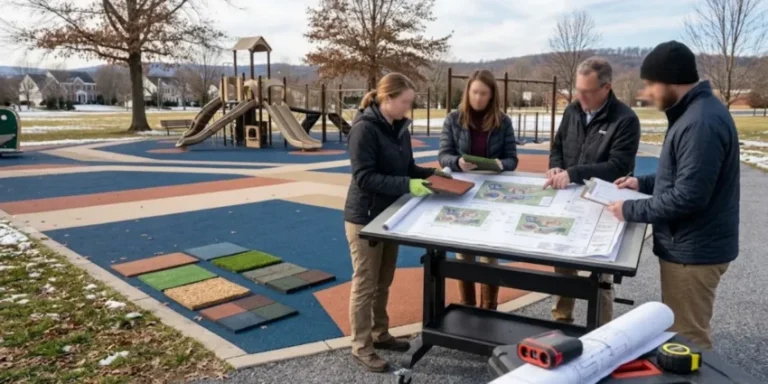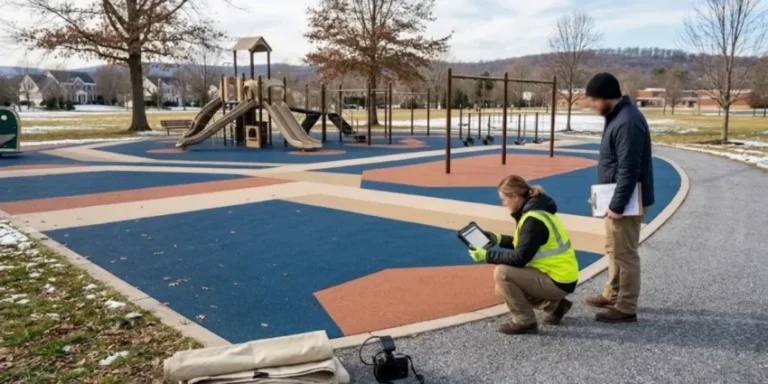
When an owner prepares a playground surfacing request for proposals or bid package, their team often works through questions about project purpose and equipment context, existing site conditions, surface system options, base preparation, transitions and edge treatments, site logistics, color and design, testing and documentation, phasing, and post-installation maintenance and closeout expectations. For hands-on project support throughout this process, playground surfacing installation and management services from Custom Park Surfacing can complement an internal procurement effort. The checklist below organizes typical decision areas into questions an owner can review with procurement, legal, and technical advisors before issuing a solicitation.
Whether you represent a school district, a municipal parks department, an architecture firm, or a general contractor seeking surfacing bids, a well-organized scope document helps you gather consistent and comparable responses. The topics in this checklist draw on several widely referenced resources for context: the CPSC Public Playground Safety Handbook describes general safety considerations for public playgrounds; the U.S. Access Board’s ADA Guidelines for Play Areas (Chapter 10) addresses accessible design in play settings; and ASTM F1292 covers a method for measuring impact attenuation of surfacing materials. Owners may wish to review these documents with their technical advisors to understand which criteria are relevant to a given project.
Key Takeaways
- An effective surfacing scope describes the project context and performance needs without naming a single approved product or manufacturer.
- Documenting existing site conditions and drainage observations helps bidders understand what they are working with.
- Questions about transitions between surface types and at edges can surface important scope details early.
- Raising testing and documentation topics during procurement helps align expectations before installation begins.
- Maintenance and warranty topics are worth addressing during procurement so owners can discuss long-term support with bidders.
What Questions Should a Playground Surfacing RFP or Bid Scope Answer?
A set of roughly ten categories of questions can help owners organize the information bidders need. The table below lists those categories and example questions an owner might review with their advisors when drafting a scope document.
| Category | Example Questions to Discuss with Advisors |
|---|---|
| Purpose and Equipment | What age group and use intensity is the playground designed for? What equipment is being installed, and what are its fall heights? Is this new construction, a renovation, or a surface replacement only? |
| Existing Conditions | What is the current ground surface (grass, asphalt, existing rubber, wood chips)? Are there known subsurface utilities or grading observations worth sharing? Has soil testing been done? |
| Surface System Intent | Is the owner interested in poured-in-place, bonded rubber mulch, engineered wood fiber, synthetic turf, or tiles? If open to multiple types, which outcomes matter most to the owner (fall height protection, ease of maintenance, appearance)? |
| Base Preparation | What base material and depth are being considered? Are there local stormwater or infiltration practices to be aware of? Would a geotextile fabric be useful given the site conditions? |
| Transitions and Edges | How will the safety surface meet adjacent hardscape, curbs, sidewalks, or grass? Are there accessible route paths the owner wants to highlight? Should edge treatments be part of the discussion? |
| Site Access and Logistics | What physical access paths exist for equipment and material delivery? Are there occupied buildings or active program areas near the work zone? What working-hour expectations or noise sensitivities should the team note? |
| Color and Design | Are there color schemes, patterns, or theming ideas the owner wants to share? Would it help to request samples or renderings? Is there an existing campus or district palette to reference? |
| Testing and Documentation | What kind of post-installation performance verification does the owner anticipate? Who would receive any test reports or documentation? Are there intermediate inspection points the owner wants recorded? |
| Phasing | Does the playground need to remain partially open during construction? Are there seasonal or calendar constraints that affect scheduling? Is temporary site protection part of the conversation? |
| Closeout and Ongoing Support | What closeout information would the owner find useful (as-built documentation, product data sheets, maintenance guides)? Would the owner value a walk-through or orientation session? What ongoing support expectations should be explored? |
How Might the Project Purpose and Equipment Be Described?
Beginning the scope with a brief project narrative helps bidders understand the context. Owners can describe the playground’s intended users (age range, expected daily use, whether it serves a school, public park, childcare center, or community space), list the play equipment being installed or already in place, and note the manufacturer’s stated fall height for each structure. Fall height information helps bidders assess surfacing depth requirements. If the project includes multiple play zones with different equipment types, noting that helps bidders consider whether a single surface system or different systems per zone would be appropriate.
What Existing Site Conditions Might Be Worth Documenting?
Sharing what is known about the current site helps bidders prepare more accurate responses. Owners can describe the existing ground cover and its general condition: bare soil, established turf, compacted gravel, aged wood mulch, or an existing bonded surface. If geotechnical or soil-percolation data exists, sharing it (or noting that typical regional conditions can be assumed) gives useful context. Flagging known underground utilities, irrigation lines, or large tree roots near the work area helps bidders understand site constraints. The more the owner shares about what is already in the ground, the fewer assumptions bidders need to make.
Why Might Owners Want to Discuss Base Preparation and Drainage?
Base preparation and drainage conditions are worth discussing because they can affect how a surface performs over time. Owners and their advisors may want to consider what base material and depth are appropriate for the chosen surface system and local conditions. Topics to explore include whether a geotextile separation layer would be useful, how stormwater typically drains on the site, and whether any local stormwater management practices apply. Raising these topics during procurement helps the owner and bidders align on expectations before work begins.
How Can Surface Type, Transitions, and Site Access Be Discussed?
If the owner has already identified a preferred surface type, stating that up front helps narrow the conversation. If the owner is open to multiple playground surfacing systems, describing the outcomes that matter most (impact protection at the stated fall heights, accessible route considerations, maintenance tolerance, expected durability) lets bidders explain how their proposed system addresses those criteria.
Transitions and edges are often worth describing in the scope. Noting every location where the safety surface meets another material (concrete walkway, curb, building wall, turf, sand play area) helps bidders understand the full picture. For site access, owners can describe the physical characteristics of the site entry path, any overhead clearance concerns, and any logistical constraints on delivery vehicle traffic or working hours. Providing this information up front helps avoid surprises later.
What Testing and Documentation Topics Might the Scope Cover?
Owners may want to discuss with their advisors what post-installation verification, if any, makes sense for the project. Topics can include whether field testing for impact attenuation is anticipated, what kind of documentation the owner would like to receive, and whether intermediate inspection photos or pre-installation checklists would be useful. The Access Board’s Chapter 10 guidelines describe accessible route considerations for play areas, and owners can note that the surface system design may be discussed with those guidelines as a reference point. Similarly, owners interested in a professional playground surface installation process may want to ask bidders what quality-assurance steps they typically follow during installation.
What Maintenance and Closeout Topics Are Worth Addressing?
Raising maintenance and long-term support expectations during procurement helps owners understand what each bidder offers beyond the initial installation. Owners can ask bidders to describe typical warranty terms for both materials and workmanship and to share a sample maintenance schedule or inspection checklist. Discussing these topics early helps the owner compare what different bidders include as standard practice.
Closeout topics to explore include what documentation the owner would like at project completion: as-built drawings, manufacturer care and maintenance guides, product data sheets, and any test or inspection records. If the owner would benefit from an orientation that covers basic surface inspection and care, mentioning it in the scope helps ensure the bidder accounts for that time.
Frequently Asked Questions
How can an owner decide whether surfacing should be a standalone scope or part of a larger project?
This is a question owners can discuss with their procurement team based on the project’s size and structure. Some owners find that surfacing as a standalone package attracts specialty contractors; others prefer to bundle it under a single general contractor. Either approach can work, and an owner’s procurement and legal advisors are best positioned to recommend what fits the organization’s policies and procurement practices.
Is it better to specify an exact surface product or describe performance criteria?
Describing performance criteria rather than naming a single product can broaden the pool of responsive bidders. Owners can share the fall height requirements, accessibility considerations, expected daily use, and maintenance tolerance, then ask bidders to propose the surface system they recommend and explain how it meets those criteria. An owner’s technical advisors can help determine which performance criteria are most important for the project.
How do the CPSC Handbook, ASTM F1292, and ADA accessibility guidelines relate to each other?
Each document serves a different purpose. The CPSC Public Playground Safety Handbook is a general resource covering playground layout, equipment, and surfacing safety topics. ASTM F1292 describes a laboratory test method for measuring the impact attenuation characteristics of surfacing materials. The Access Board’s ADA Chapter 10 guidelines describe accessible design considerations for play areas, including accessible routes, transfer systems, and ground-level play components. Owners and their advisors can review each resource to determine which criteria are relevant to a specific project.
What level of site documentation helps bidders prepare accurate responses?
Providing a dimensioned site plan showing the playground footprint, equipment locations with fall heights, surfacing area boundaries, accessible route paths, any known underground utilities, grade or spot elevation information, and site access points gives bidders a solid foundation. Recent photos of the existing site conditions are also helpful and relatively easy to include.
How can an owner evaluate warranty information from different bidders?
Owners may want to ask each bidder to describe what their warranty covers (materials, workmanship, or both), the warranty duration, what conditions or exclusions apply, whether the warranty is backed by the installer or the manufacturer, and what process the owner would follow to address a concern. Comparing these details side by side helps the owner and their advisors assess each bidder’s long-term support posture.
What should an owner know about existing surfacing when planning a project?
The condition of the existing surface often influences the scope. Owners can describe what is currently on site and its general condition honestly, and ask bidders to explain what approach they recommend (removal, partial removal, or preparation for a new system) and why. An owner’s technical advisors can help evaluate the recommended approaches.
How can an owner prepare to compare bid responses fairly?
Creating a simple comparison framework before bids arrive can help. Owners might list the key criteria they care about (such as surface type proposed, warranty terms, scheduled duration, and scope of services included) and note how each bid addresses them. An owner’s procurement or project management advisors can help design a comparison approach that aligns with the organization’s standard practices.
For help building a procurement scope for your next project, contact us. You can also explore the rubber mulch coverage calculator and review information on the typical cost of poured-in-place rubber surfacing to inform your planning.