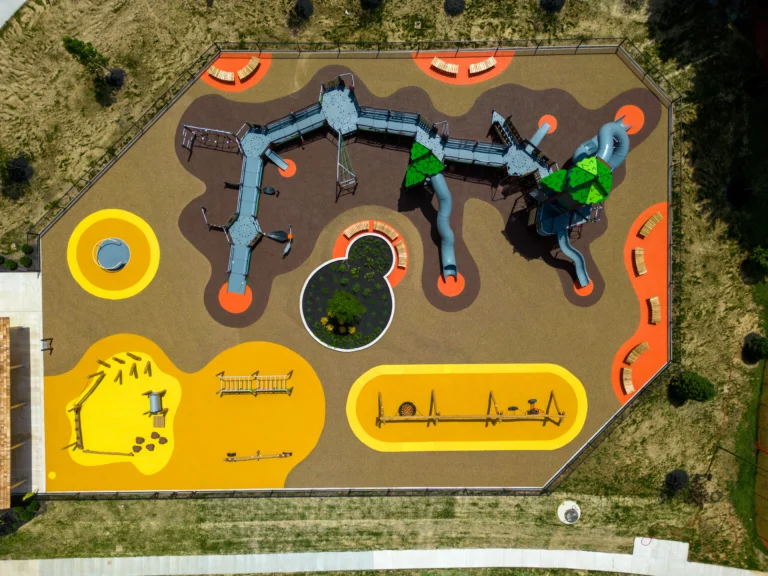
Creating a safe and accessible playground requires more than simply selecting playground equipment. The surface beneath and around that equipment plays a critical role in injury prevention, accessibility, and long-term compliance with recognized safety standards. In Virginia, playground owners, schools, municipalities, parks, churches, daycare centers, and community organizations must ensure their playgrounds meet federal accessibility requirements and follow industry-recognized safety guidelines.
While Virginia does not have a separate statewide playground surfacing code that replaces national standards, playground projects are generally expected to comply with the Americans with Disabilities Act (ADA) and follow recommendations established by ASTM International and the Consumer Product Safety Commission (CPSC). Understanding these requirements can help playground owners make informed decisions while reducing liability risks and creating inclusive play environments.
At Custom Park, we help organizations throughout Virginia design and install playground surfacing systems that meet accessibility requirements and align with industry safety standards. This guide explains the key regulations affecting playground surfacing and how to ensure your project remains compliant.
Why Playground Surface Compliance Matters
Playground surfacing is one of the most important safety features of any playground. According to national injury data, falls account for the majority of playground-related injuries. The right surfacing material helps absorb impact energy and reduce the likelihood of serious injuries when children fall from playground equipment.
Compliance with recognized standards helps ensure that playgrounds provide adequate fall protection while remaining accessible to users of all abilities. Meeting these requirements can also help schools, municipalities, and organizations minimize liability concerns while creating a safer experience for children and families.
Whether you are building a new playground or upgrading an existing one, understanding ADA, ASTM, and CPSC guidelines is essential during the planning process.
Understanding ADA Playground Accessibility Requirements
The Americans with Disabilities Act is a federal law designed to ensure equal access for individuals with disabilities. Public playgrounds, schools, parks, and many community facilities must provide accessible routes and inclusive play opportunities for children with varying physical abilities.
One of the most significant aspects of ADA compliance involves playground surfacing. Accessible routes must connect parking areas, sidewalks, playground entrances, and play components. The surface must be firm, stable, and slip-resistant so that individuals using wheelchairs, walkers, crutches, or other mobility devices can move throughout the playground safely.
Certain loose-fill materials can create barriers for accessibility because they shift over time and may make navigation difficult. As a result, many Virginia playground owners choose accessible surfacing systems such as poured-in-place rubber or bonded rubber mulch.
Creating an ADA-compliant playground helps ensure that children of all abilities can participate in play activities and enjoy meaningful access to recreational spaces.
What Is ASTM and Why Does It Matter?
ASTM International develops technical standards that help establish safety and performance criteria for products used in a variety of industries, including playgrounds.
Several ASTM standards specifically address playground equipment and surfacing. One of the most important for playground owners is ASTM F1292, which evaluates the impact attenuation performance of playground surfacing materials. This testing measures how effectively a surface absorbs impact forces during falls and helps determine whether the material provides sufficient protection against serious head injuries.
ASTM standards also address accessibility, durability, and performance requirements for playground surfacing systems. Manufacturers typically test their surfacing products to verify compliance with these standards before installation.
When selecting a playground surface, it is important to verify that the material has been tested according to applicable ASTM requirements. Doing so helps ensure the surface can perform as intended and meet recognized safety expectations.
Understanding CPSC Playground Guidelines
The Consumer Product Safety Commission publishes the Public Playground Safety Handbook, one of the most widely referenced resources in the playground industry.
Although CPSC guidelines are not federal laws, they are considered the industry standard for playground safety. Many playground inspectors, insurance providers, architects, and playground professionals use CPSC recommendations when evaluating playground design and safety.
The handbook provides guidance on equipment spacing, use zones, maintenance procedures, and protective surfacing requirements. It also outlines recommendations for reducing common playground hazards and improving overall safety.
One of the primary focuses of the CPSC guidelines is ensuring that playground surfacing extends throughout areas where falls are likely to occur. Proper installation and ongoing maintenance are essential to maintaining the protective qualities of the surfacing over time.
The Importance of Critical Fall Height
Critical fall height is one of the most important concepts in playground surfacing compliance.
This measurement refers to the maximum height from which a child can fall onto a surface without sustaining a life-threatening head injury. Playground equipment height directly influences the required performance level of the safety surfacing.
For example, a playground with climbing towers, elevated platforms, and large play structures will require greater impact protection than a playground designed for younger children with lower equipment.
ASTM testing determines the critical fall height rating of a surfacing system. Playground owners should always ensure that the selected surfacing material provides adequate protection for the tallest equipment installed on the site.
Choosing a surface without considering critical fall height requirements can result in safety concerns and potential compliance issues.
Playground Surfacing Options That Support Compliance
Several playground surfacing systems can help Virginia playground owners meet accessibility and safety requirements.
Poured-in-Place Rubber
Poured-in-place rubber is one of the most popular compliant surfacing options available. Its seamless design provides excellent accessibility while delivering consistent impact attenuation throughout the playground.
Because the surface is smooth and stable, wheelchairs and mobility devices can easily navigate the area. The customizable design options also allow schools and parks to create unique, visually appealing playgrounds.
Bonded Rubber Mulch
Bonded rubber mulch combines recycled rubber particles with a specialized binder to create a cohesive, impact-absorbing surface.
This option offers many of the benefits of rubber surfacing while maintaining a more natural appearance. Bonded rubber mulch can improve accessibility compared to traditional loose-fill materials and provides excellent fall protection when properly installed.
The Role of Professional Installation
Proper installation is essential for achieving compliance with ADA accessibility requirements and ASTM safety standards.
Even high-quality surfacing materials can fail to provide adequate protection if installed incorrectly. Surface thickness, drainage design, accessibility routes, and fall protection zones must all be carefully planned and executed.
Professional playground surfacing installers understand how various standards interact and can help ensure that every aspect of the installation meets the project’s safety and accessibility goals.
Working with experienced playground professionals can help prevent costly mistakes and provide greater confidence in the finished playground.
Ongoing Maintenance and Inspections
Compliance is not a one-time achievement. Playground owners must regularly inspect and maintain surfacing systems to ensure they continue providing adequate protection and accessibility.
Routine inspections should identify signs of wear, damage, drainage issues, surface separation, or accessibility concerns. Prompt repairs can help prevent safety hazards while extending the lifespan of the surfacing investment.
Maintaining accurate records of inspections and repairs can also support liability protection and demonstrate a commitment to playground safety.
A proactive maintenance program helps preserve compliance and keeps playgrounds safe for years to come.
Partner with Custom Park for Compliant Playground Surfacing in Virginia
Navigating playground safety and accessibility requirements can be complex, but you do not have to do it alone. At Custom Park, we help schools, municipalities, churches, parks, and community organizations throughout Virginia select and install playground surfacing systems that prioritize safety, accessibility, durability, and compliance.
Whether you’re considering poured-in-place rubber, bonded rubber mulch, or another playground surfacing solution, our team can help you understand ADA requirements, ASTM standards, and CPSC recommendations while finding the best fit for your project and budget.
Contact Custom Park today to learn more about creating a safe, accessible, and compliant playground surface that will serve your community for years to come.