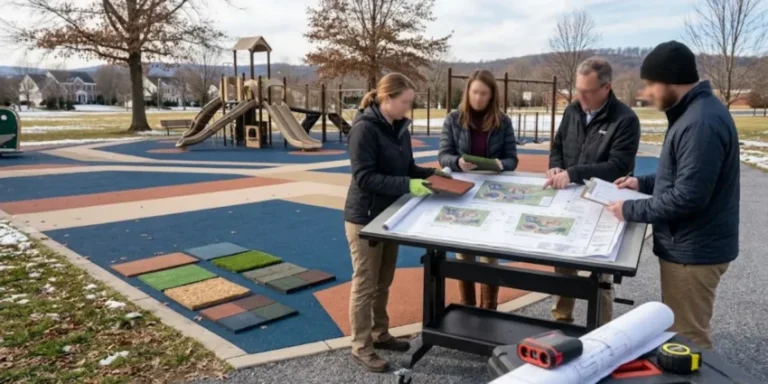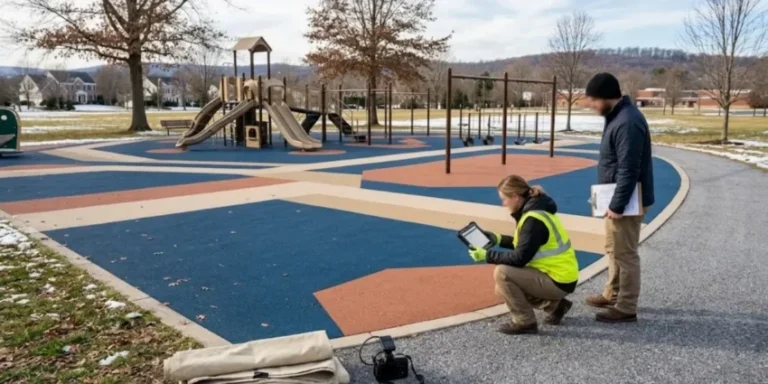
Playgrounds are designed to provide children with opportunities for recreation, exercise, and social interaction, but safety must always remain a top priority. In Florida, playground owners, schools, municipalities, parks, churches, and childcare facilities must ensure their playgrounds meet important accessibility and safety standards. While Florida does not have a unique statewide playground surfacing code separate from national standards, playgrounds are expected to comply with federal accessibility requirements and recognized safety guidelines established by organizations such as the Americans with Disabilities Act (ADA), ASTM International, and the Consumer Product Safety Commission (CPSC).
Understanding these regulations can be challenging, especially when selecting playground surfacing materials. Choosing the right safety surface is essential not only for protecting children from injuries but also for maintaining compliance and reducing liability risks.
At Custom Park, we help organizations throughout Florida design and install playground surfacing systems that meet ADA accessibility requirements and align with ASTM and CPSC safety recommendations. This guide explains what playground owners need to know about compliance and how proper surfacing plays a critical role in creating safe, inclusive play environments.
Why Playground Surface Compliance Matters
Playground surfacing serves as the foundation of playground safety. While playground equipment often receives the most attention, many serious injuries occur when children fall from climbing structures, swings, slides, or other elevated play components.
Proper playground surfacing helps absorb impact forces and reduce the severity of fall-related injuries. Compliance with ADA, ASTM, and CPSC guidelines ensures that playground surfaces provide adequate protection while remaining accessible to children of all abilities.
Failure to meet accepted safety standards can increase liability exposure, create accessibility challenges, and potentially result in costly repairs or renovations. For public playgrounds, schools, and community facilities, compliance is often required to maintain eligibility for grants, funding opportunities, and insurance coverage.
Understanding ADA Playground Requirements
The Americans with Disabilities Act is a federal law designed to ensure equal access for individuals with disabilities. For playgrounds, ADA compliance focuses heavily on accessibility, allowing children with mobility limitations to access and enjoy play spaces alongside their peers.
One of the most important aspects of ADA compliance involves the playground surface itself. Accessible routes must connect parking areas, sidewalks, playground entrances, and play components. The surface must provide stable, firm, and slip-resistant conditions that allow wheelchair users and individuals with mobility devices to navigate the playground safely.
Certain loose-fill materials may present accessibility challenges because wheelchairs and walkers can become difficult to maneuver across uneven surfaces. For this reason, many Florida playground owners choose accessible surfacing options such as poured-in-place rubber or bonded rubber mulch.
An ADA-compliant playground should allow users to reach and enjoy a meaningful range of play experiences without encountering unnecessary barriers.
What Is ASTM and Why Is It Important?
ASTM International develops technical standards used throughout many industries, including playground design and construction. Playground safety surfacing is commonly evaluated according to ASTM standards that address impact attenuation, accessibility, durability, and performance.
One of the most significant standards related to playground surfacing is ASTM F1292. This standard evaluates how effectively a playground surface absorbs impact from falls. Testing helps determine whether the surface can reduce the likelihood of serious head injuries when children fall from playground equipment.
ASTM standards establish minimum performance criteria for safety surfacing systems. Playground owners should verify that any surfacing material they select has been tested and certified according to applicable ASTM requirements.
Compliance with ASTM standards demonstrates that the surfacing system has undergone rigorous evaluation and can provide the level of protection expected in modern playground environments.
Understanding CPSC Playground Guidelines
The Consumer Product Safety Commission publishes the Public Playground Safety Handbook, one of the most widely referenced resources in the playground industry. Although CPSC guidelines are not federal laws, they are considered the industry benchmark for playground safety.
The handbook provides recommendations for playground design, equipment spacing, maintenance practices, and protective surfacing requirements. Many inspectors, insurance providers, and playground professionals use CPSC guidelines when evaluating playground safety.
According to CPSC recommendations, playground surfacing should be installed beneath and around equipment where falls may occur. The depth and type of surfacing should correspond to the fall height of the equipment to ensure adequate protection.
CPSC guidance also emphasizes the importance of maintaining surfacing materials over time. Even high-quality safety surfaces can lose effectiveness if damaged, worn, or improperly maintained.
Playground Surfacing and Critical Fall Height
One of the most important concepts in playground safety compliance is critical fall height. This measurement refers to the maximum height from which a child can fall onto a surface without sustaining a life-threatening head injury.
ASTM testing determines the critical fall height rating of a playground surface. The required rating depends on the height of the playground equipment installed on the site.
For example, a playground featuring tall climbing structures requires surfacing capable of protecting children from falls at greater heights than a playground designed primarily for toddlers.
When planning a Florida playground project, surfacing should always be selected based on the equipment being installed and the fall protection requirements associated with that equipment.
Professional playground designers and surfacing specialists can help ensure the chosen system provides appropriate protection throughout the entire play area.
Popular Compliant Playground Surfacing Options
Several playground surfacing systems can help Florida playground owners meet ADA accessibility requirements and ASTM safety standards.
Poured-in-place rubber remains one of the most popular choices because it combines excellent accessibility with outstanding impact protection. Its seamless design allows wheelchairs and mobility devices to move easily throughout the playground while providing reliable fall protection.
Bonded rubber mulch is another effective option. It offers strong impact attenuation and improved accessibility compared to loose-fill materials while maintaining a natural appearance that many parks and schools prefer.
Engineered wood fiber can also meet accessibility and safety requirements when properly installed and maintained. However, it generally requires more ongoing maintenance than rubber surfacing systems and may need periodic replenishment to maintain compliance.
The best solution depends on the specific goals, budget, and usage requirements of the playground project.
Florida Climate Considerations for Playground Surfacing
Florida’s climate presents unique challenges that should be considered when selecting playground surfacing.
Frequent rainfall, intense sunlight, high humidity, and occasional severe weather events can impact playground materials over time. Surfacing systems must be durable enough to withstand these environmental conditions while maintaining their safety performance.
Rubber surfacing systems are often favored in Florida because they resist erosion, insect damage, and decomposition. Properly installed rubber surfaces also provide excellent drainage, helping playgrounds dry more quickly after rain.
UV-resistant materials can help preserve color and appearance despite prolonged sun exposure, reducing maintenance needs and extending the lifespan of the surface.
Choosing a surfacing system designed for Florida’s climate can improve long-term performance and help maintain compliance over the life of the playground.
The Importance of Professional Installation
Even the highest-quality playground surfacing material can fail to meet safety standards if it is installed incorrectly.
Professional installation helps ensure proper surface depth, impact attenuation performance, drainage, accessibility, and compliance with applicable guidelines. Experienced playground surfacing contractors understand how ADA, ASTM, and CPSC requirements work together and can help prevent costly mistakes.
Installation professionals can also coordinate surfacing design with playground equipment layouts to ensure adequate use zones, fall protection coverage, and accessible routes throughout the playground.
Working with qualified playground specialists helps streamline the compliance process and gives playground owners greater confidence in the finished project.
Ongoing Maintenance and Compliance
Compliance does not end once a playground is installed. Regular inspections and maintenance are essential for preserving safety and accessibility over time.
Playground operators should periodically inspect surfacing for signs of wear, damage, displacement, drainage issues, or accessibility concerns. Prompt repairs help maintain compliance and reduce the risk of injuries.
Routine maintenance also extends the lifespan of the surfacing investment and helps ensure continued adherence to safety guidelines.
Keeping detailed maintenance records can further support liability protection and demonstrate a commitment to playground safety.
Partner with Custom Park for Compliant Playground Surfacing in Florida
Understanding ADA, ASTM, and CPSC playground surfacing requirements can feel overwhelming, but the right partner can make the process much easier. At Custom Park, we help schools, municipalities, parks, churches, and community organizations throughout Florida select and install playground surfacing systems that prioritize safety, accessibility, durability, and long-term compliance.
Whether you’re considering poured-in-place rubber, bonded rubber mulch, or another safety surfacing solution, our team can help you navigate regulatory requirements and choose the best option for your playground.
Contact Custom Park today to learn more about creating a safe, accessible, and compliant playground that serves your community for years to come.