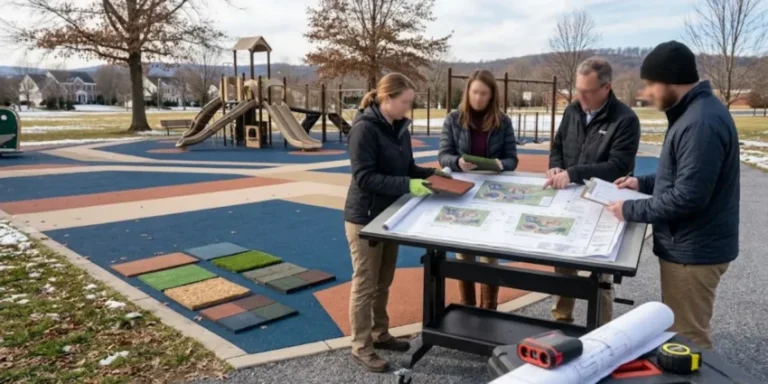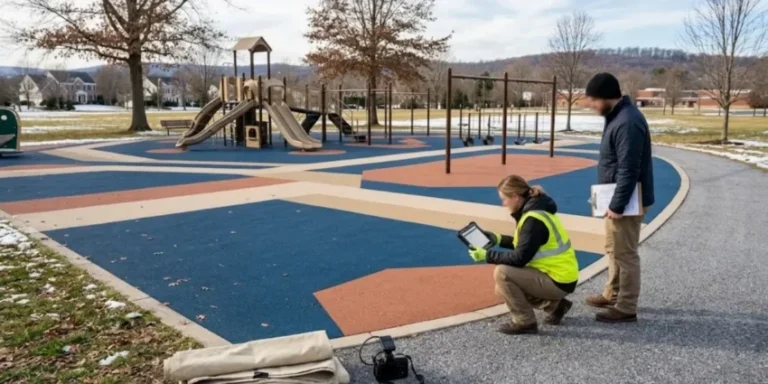
Designing a playground in Pennsylvania involves much more than choosing fun equipment. One of the most important aspects of any playground project is selecting the right surfacing. Playground surfacing plays a critical role in protecting children from injuries, improving accessibility, and ensuring compliance with nationally recognized safety standards. Whether you’re planning a playground for a school, municipality, church, daycare, HOA, or park district, understanding the regulations surrounding playground surfacing can help you make informed decisions that benefit your community for years to come.
Unlike some building codes, Pennsylvania does not have its own standalone playground surfacing standard. Instead, playgrounds are generally expected to follow nationally recognized guidelines established by the Americans with Disabilities Act (ADA), ASTM International, and the U.S. Consumer Product Safety Commission (CPSC). These standards work together to promote safer, more accessible playgrounds while reducing the risk of injuries and liability.
At Custom Park, we help organizations throughout Pennsylvania design and install playground surfacing systems that meet these industry standards while providing long-lasting performance. From poured-in-place rubber and bonded rubber mulch to artificial grass and Flexi-Pave, we offer solutions that balance safety, accessibility, and durability.
Why Playground Surfacing Is So Important
Playground equipment naturally encourages climbing, jumping, and active play, which means falls are inevitable. While no playground surface can completely eliminate injuries, properly installed impact-absorbing surfacing significantly reduces the severity of falls.
Many serious playground injuries occur because of inadequate or poorly maintained surfacing rather than faulty equipment. Choosing the correct surface can help cushion falls from slides, climbers, monkey bars, and other elevated play structures while creating a safer environment for children of all ages.
Beyond injury prevention, quality playground surfacing improves accessibility for children with disabilities, enhances drainage, minimizes maintenance, extends the life of the playground, and helps organizations maintain compliance with recognized safety standards.
Understanding Playground Surface Regulations in Pennsylvania
Pennsylvania primarily relies on nationally recognized playground safety standards rather than developing its own unique requirements. Public playgrounds, schools, municipalities, and childcare facilities often reference these standards during design, installation, and inspections.
The three primary organizations that influence playground surfacing include the Americans with Disabilities Act (ADA), ASTM International, and the Consumer Product Safety Commission (CPSC). Each organization focuses on different aspects of playground safety and accessibility, but together they create a comprehensive framework for designing safer play environments.
Understanding how these standards work together is essential when selecting playground surfacing that protects children while meeting industry expectations.
ADA Requirements for Accessible Playground Surfacing
The Americans with Disabilities Act was created to ensure people with disabilities have equal access to public facilities, including playgrounds. Accessible playgrounds allow children of all abilities to enjoy recreational spaces together while providing caregivers with easier access throughout the play area.
For playground surfacing, ADA compliance means creating surfaces that are firm, stable, and slip resistant. Children using wheelchairs, walkers, crutches, or other mobility devices should be able to travel safely throughout the playground without becoming stuck or encountering unnecessary obstacles.
One of the primary standards referenced for accessibility is ASTM F1951, which measures how easily a wheelchair can move across a playground surface.
Several surfacing options can help playgrounds meet ADA accessibility requirements.
Poured-in-place rubber creates a seamless surface that allows wheelchairs and mobility devices to move easily throughout the playground. Artificial grass systems designed specifically for playgrounds provide similar accessibility while maintaining a natural appearance. Bonded rubber mulch creates a more stable surface than loose-fill materials because the rubber pieces are bonded together, helping reduce shifting over time. Flexi-Pave also provides a firm, porous surface that supports accessibility while allowing water to drain efficiently.
Creating accessible routes between parking areas, sidewalks, playground entrances, and play equipment is just as important as selecting the proper surfacing material.
ASTM Standards That Protect Children
ASTM International develops technical safety standards used throughout the playground industry. These standards help manufacturers, designers, installers, and inspectors evaluate playground equipment and surfacing.
One of the most important standards related to playground surfacing is ASTM F1292.
This standard measures impact attenuation, or how effectively a playground surface absorbs the force of a child’s fall. Testing evaluates Head Injury Criterion (HIC), G-Max values, and critical fall height to determine whether the surfacing provides adequate protection beneath playground equipment.
Every piece of playground equipment has a designated fall height, and the surfacing beneath it should be tested for at least that height. Installing surfacing without considering fall height can leave children vulnerable to serious injuries.
ASTM F1951 focuses specifically on accessibility. Rather than measuring fall protection, it evaluates the force required for someone using a wheelchair to travel across the surface.
Together, these ASTM standards help ensure playground surfacing protects children during falls while remaining accessible for everyone who visits the playground.
The Role of the Consumer Product Safety Commission
The Consumer Product Safety Commission publishes the Public Playground Safety Handbook, one of the most widely used playground safety resources in the United States.
Although the handbook itself is considered guidance rather than federal law, many organizations—including schools, municipalities, and childcare facilities—use its recommendations when designing and maintaining playgrounds.
The handbook covers nearly every aspect of playground safety, including protective surfacing, equipment spacing, fall zones, maintenance practices, inspection procedures, and hazard identification.
One of its primary goals is reducing injuries caused by falls. The handbook emphasizes installing appropriate protective surfacing beneath all elevated playground equipment and maintaining that surfacing over time so it continues performing as intended.
Following CPSC recommendations helps playground owners create safer recreational environments while demonstrating a commitment to best practices.
Choosing the Right Playground Surfacing
Every playground has unique needs depending on its location, budget, expected traffic, and maintenance resources. Choosing the right surfacing means balancing safety, accessibility, appearance, durability, and long-term costs.
Poured-in-Place Rubber
Poured-in-place rubber remains one of the most popular playground surfacing options because it offers exceptional safety and accessibility. Installed as one seamless surface, it provides consistent fall protection while eliminating many trip hazards found with loose materials.
Its durability makes it ideal for schools, parks, and municipalities that experience heavy daily use. It is also available in numerous colors and custom designs, allowing playground owners to create engaging, attractive play environments.
Bonded Rubber Mulch
Bonded rubber mulch provides the appearance of traditional mulch while offering greater stability and durability. Because the rubber pieces are bonded together, the surface stays in place better than loose-fill materials and requires less ongoing maintenance.
It also provides excellent impact attenuation while helping organizations maintain a cleaner playground environment throughout the year.
Artificial Grass for Playgrounds
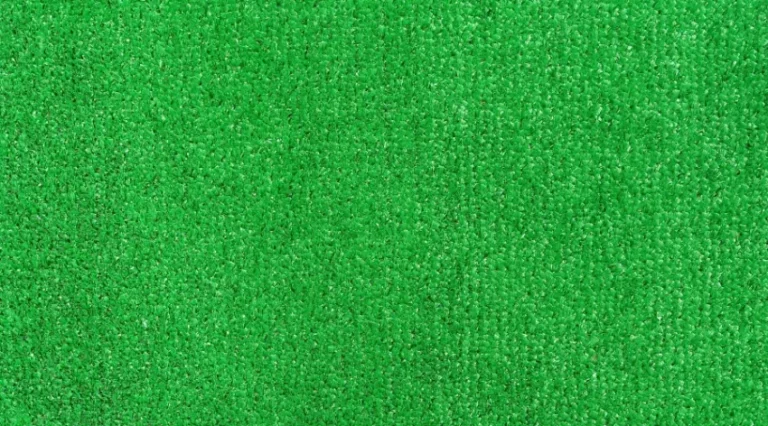
Artificial grass systems designed for playgrounds combine synthetic turf with specialized padding underneath to create a soft, attractive playing surface.
These systems offer dependable fall protection, excellent drainage, and reduced maintenance compared to natural grass. They also eliminate muddy conditions while providing an accessible surface that can support wheelchairs and other mobility devices when properly installed.
Flexi-Pave
Flexi-Pave is a porous rubber paving system commonly used around playgrounds, walking paths, splash pads, and recreational areas. Its unique design allows rainwater to drain through the surface rather than collect on top, reducing puddles and improving safety after storms.
Flexi-Pave creates a smooth, accessible surface while offering excellent durability and low maintenance, making it an ideal solution for many Pennsylvania playground projects.
Professional Installation Matters
Even the highest-quality playground surfacing will not perform properly if it is installed incorrectly.
Professional installation ensures proper base preparation, adequate drainage, correct surfacing thickness, smooth transitions between materials, and complete coverage throughout required fall zones. These details directly affect both safety and long-term performance.
Experienced playground installers also understand how ADA, ASTM, and CPSC requirements work together, helping organizations avoid costly mistakes that could require future repairs or modifications.
Maintaining Playground Compliance
Installing compliant playground surfacing is only the beginning. Regular inspections and maintenance are necessary to ensure the surface continues performing safely for years to come.
Weather, heavy foot traffic, tree roots, and normal wear can gradually affect playground surfacing. Periodic inspections help identify small problems before they become larger safety concerns.
Keeping surfaces clean, repairing damaged areas promptly, and evaluating impact performance over time helps extend the life of the playground while maintaining compliance with industry standards.
Organizations that prioritize ongoing maintenance also demonstrate a commitment to providing safe recreational spaces for children and families.
Trust Custom Park for Pennsylvania Playground Surfacing
Creating a safe playground requires thoughtful planning, quality materials, and experienced installation. At Custom Park, we work with schools, municipalities, churches, parks, childcare centers, HOAs, and community organizations throughout Pennsylvania to design playground surfacing systems that prioritize safety, accessibility, and long-term value.
Whether you’re interested in poured-in-place rubber, bonded rubber mulch, artificial grass for playgrounds, or Flexi-Pave, our team can help you choose the best solution for your specific project and budget. We understand the importance of ADA accessibility, ASTM impact standards, and CPSC playground safety guidelines, and we’re committed to delivering playgrounds that children can enjoy safely for years to come.
If you’re planning a new playground or upgrading an existing one, contact Custom Park today to learn more about our playground surfacing solutions and how we can help you create a safe, compliant, and welcoming play environment anywhere in Pennsylvania.