When designing a safe, attractive, and long-lasting playground, selecting the right surfacing material is one of the most important decisions you can make. Playground surfacing directly impacts safety, accessibility, maintenance requirements, and the overall appearance of the play area. Two of the most popular options available today are poured-in-place (PIP) rubber and bonded rubber mulch. Both provide excellent fall protection and offer significant advantages over traditional materials such as wood chips, sand, or gravel.
At Custom Park, we install both poured-in-place rubber and bonded rubber mulch playground surfacing systems, helping schools, parks, municipalities, churches, daycare centers, and community organizations create safer and more enjoyable play environments. Understanding the differences between these two surfacing options can help you determine which solution best fits your project, budget, and long-term goals.
Understanding Poured-in-Place Rubber Surfacing
Poured-in-place rubber is a seamless safety surface made from recycled rubber granules combined with a specialized binding agent. The material is mixed on-site and professionally installed directly over a prepared base. Once cured, it creates a smooth, durable, and highly accessible playground surface.
One of the biggest benefits of poured-in-place rubber is its ability to provide consistent impact attenuation throughout the entire playground. Because the surface is poured and installed as one continuous layer, there are no loose materials to shift, scatter, or create uneven areas.
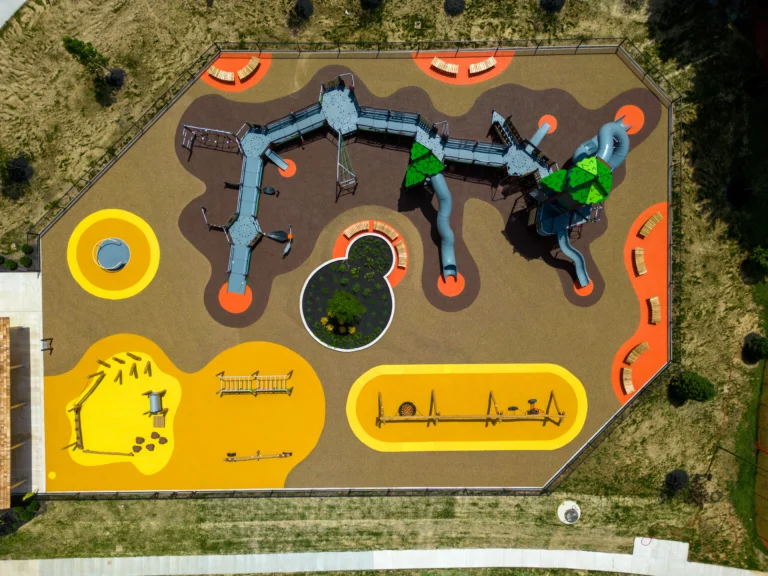
Poured-in-place rubber is also highly customizable. Playground owners can choose from a variety of colors, patterns, designs, and graphics to create visually appealing play environments that encourage creativity and engagement. Schools often incorporate educational elements such as maps, numbers, letters, and games directly into the surface.
Understanding Bonded Rubber Mulch
Bonded rubber mulch combines recycled rubber nuggets with a binding agent to create a durable, porous playground surface. Unlike traditional loose-fill rubber mulch, bonded rubber mulch is installed as a cohesive layer that stays in place while maintaining the natural appearance of mulch.
This surfacing option offers many of the benefits associated with rubber safety surfaces while delivering a more budget-friendly alternative to poured-in-place systems. Bonded rubber mulch provides excellent shock absorption and fall protection while requiring less material and labor during installation.
Because it retains the look of traditional mulch, many parks and playground operators appreciate its natural appearance while still benefiting from the durability and safety features of recycled rubber.
Comparing Playground Safety
Safety is often the primary factor when selecting playground surfacing. Both poured-in-place rubber and bonded rubber mulch are designed to meet playground safety standards and provide protection from fall-related injuries.
Poured-in-place rubber offers highly consistent impact protection across the entire surface. Since the material is installed as a continuous layer, there are no gaps, uneven spots, or areas where surfacing depth can vary. This consistency makes it easier to maintain compliance with playground safety guidelines over time.
Bonded rubber mulch also provides excellent fall protection. The rubber material helps absorb impact energy, reducing the risk of serious injuries. Because the mulch particles are bonded together, the surface remains more stable than traditional loose-fill materials. This helps prevent displacement that can sometimes occur with wood fiber or loose mulch systems.
Both options can create safe play environments when professionally installed and properly maintained.
Accessibility Considerations
Accessibility is increasingly important for playgrounds serving diverse communities. Schools, parks, and municipalities often need to meet accessibility requirements while ensuring all children can enjoy playground equipment comfortably and safely.
Poured-in-place rubber is widely considered one of the most accessible playground surfacing options available. Its smooth, seamless surface allows wheelchairs, walkers, strollers, and mobility devices to move easily throughout the playground. Children with mobility challenges can access more areas of the play space without difficulty.
Bonded rubber mulch offers improved accessibility compared to loose-fill materials, but it may not provide the same level of smooth mobility as poured-in-place rubber. While the bonded surface creates a stable walking area, it typically retains a slightly textured appearance that can make movement somewhat more challenging for certain mobility devices.
For playgrounds where maximum accessibility is a top priority, poured-in-place rubber often has the advantage.
Appearance and Design Flexibility
The visual appeal of a playground can significantly impact user experience and community engagement.
Poured-in-place rubber provides nearly unlimited design possibilities. Different colors can be combined to create unique patterns, logos, mascots, educational games, pathways, and themed environments. This customization allows schools and parks to create a truly unique play area that reflects their identity and encourages imaginative play.
Many playground owners use poured-in-place surfacing to incorporate branding elements or educational features directly into the playground design. The seamless appearance also creates a clean, modern aesthetic that many communities find attractive.
Bonded rubber mulch offers a more natural appearance that resembles traditional mulch while providing the performance benefits of rubber. It is available in various color options and can complement playground equipment and landscaping effectively. While it does not offer the same level of intricate customization as poured-in-place rubber, it still provides an attractive finished appearance.
Maintenance Requirements
Every playground surface requires some level of maintenance, but the amount of ongoing attention varies depending on the material selected.
Poured-in-place rubber generally requires minimal maintenance. Routine inspections, cleaning, and occasional repairs are typically all that is needed to keep the surface performing well. Since the material remains fixed in place, there is no need to replenish surfacing or redistribute materials throughout the playground.
This low-maintenance characteristic makes poured-in-place rubber especially appealing for schools and municipalities with limited maintenance resources.
Bonded rubber mulch also requires relatively little maintenance compared to traditional loose-fill materials. Because the rubber pieces are bonded together, the surface remains stable and does not scatter throughout the playground. Routine inspections and occasional repairs can help preserve the surface and extend its lifespan.
Both options reduce maintenance demands significantly when compared to engineered wood fiber or loose mulch surfaces.
Durability and Longevity
Playground surfacing represents a long-term investment, making durability an important consideration.
Poured-in-place rubber is known for its exceptional durability. When installed correctly and maintained properly, it can provide many years of reliable performance. The seamless construction resists erosion, shifting, and displacement while maintaining its protective qualities over time.
Weather conditions, heavy foot traffic, and frequent playground use generally have minimal impact on the surface when compared to traditional materials.
Bonded rubber mulch is also highly durable. The rubber material resists decomposition, insect damage, and weather-related deterioration. Unlike organic mulch products, rubber does not break down quickly or require regular replacement.
Both surfacing systems offer significantly longer service lives than traditional playground surfacing materials.
Cost Comparison
Budget often plays a major role in playground planning decisions.
Poured-in-place rubber typically involves a higher initial investment. The installation process requires specialized equipment, professional expertise, and additional labor. However, many playground owners view the higher upfront cost as worthwhile due to the surface’s durability, accessibility, and low maintenance requirements.
Bonded rubber mulch generally costs less than poured-in-place rubber while still delivering excellent safety and durability benefits. For organizations seeking a balance between performance and affordability, bonded rubber mulch can be an attractive option.
When evaluating costs, it is important to consider not only installation expenses but also long-term maintenance and replacement costs. In many cases, investing in high-quality rubber surfacing can result in lower overall ownership costs over the life of the playground.
Which Playground Surface Is Right for Your Project?
The best choice ultimately depends on your project’s goals, budget, and priorities.
If maximum accessibility, customization, and a seamless appearance are your top concerns, poured-in-place rubber is often the preferred solution. Its smooth surface, design flexibility, and long-term durability make it a popular choice for schools, parks, and inclusive playgrounds.
If you want excellent safety performance, a natural appearance, and a more budget-friendly option, bonded rubber mulch may be the ideal choice. It provides many of the benefits of rubber surfacing while offering a lower initial investment.
Both materials create safer, cleaner, and more durable playground environments than traditional surfacing options.
Partner with Custom Park for Playground Surfacing Solutions
Choosing the right playground surfacing is an important decision that affects safety, accessibility, maintenance, and long-term value. At Custom Park, we offer both poured-in-place rubber and bonded rubber mulch surfacing systems to help clients create playgrounds that meet their unique needs and budgets.
Our team works closely with schools, municipalities, parks, churches, and community organizations throughout the planning and installation process. Whether you’re building a new playground or upgrading an existing one, we can help you determine which surfacing option will deliver the best results for your project.
Contact Custom Park today to learn more about our poured-in-place rubber and bonded rubber mulch playground surfacing solutions and start creating a safer, more enjoyable play environment for your community.