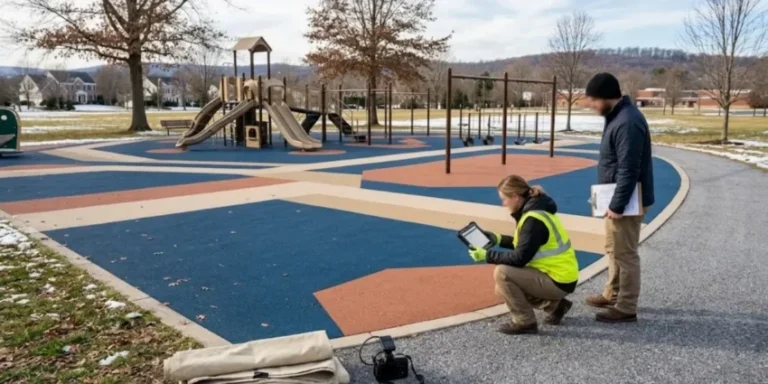
Playground safety is an important priority for schools, parks, churches, HOAs, daycare centers, and municipalities across Georgia. One of the most critical components of a safe playground design is the fall zone. Proper fall zones help reduce the risk of serious injuries by providing impact-absorbing surfacing around playground equipment.
A playground fall zone, also known as a use zone, is the area surrounding playground equipment where protective surfacing is required. Since falls are the leading cause of playground-related injuries, Georgia playgrounds must follow nationally recognized safety standards that establish proper surfacing depth, equipment spacing, and impact attenuation requirements.
At Custom Park, we help schools, commercial properties, parks, and municipalities throughout Georgia create safe, compliant playground environments with professionally installed safety surfacing and customized recreation solutions.
What Is a Playground Fall Zone?
A playground fall zone is the designated protective area beneath and around playground equipment that is covered with impact-attenuating surfacing materials. The purpose of the fall zone is to help cushion falls and reduce the severity of injuries when children play.
Children naturally climb, jump, run, and swing during play, which increases the possibility of falls from elevated equipment. Without proper surfacing, hard ground surfaces like concrete, asphalt, or compacted dirt can significantly increase the risk of serious injury.
According to the Consumer Product Safety Commission (CPSC), protective surfacing is required under and around all elevated playground equipment.
Fall zones must remain clear of hazards such as exposed concrete footings, benches, curbs, edging, and other obstacles that could create additional injury risks.
Georgia Playground Safety Standards
Georgia playgrounds generally follow playground safety standards established by ASTM International and the Consumer Product Safety Commission.
Key playground safety standards include:
- ASTM F1292 for playground surfacing impact attenuation
- ASTM F1487 for public playground equipment safety
- ASTM F1951 for ADA accessibility requirements
- CPSC Public Playground Safety Handbook guidelines
These standards help establish requirements for:
- Playground surfacing performance
- Fall zone dimensions
- Equipment spacing
- Accessibility
- Maintenance procedures
- Playground inspections
Many schools, parks, childcare facilities, and municipalities throughout Georgia use these standards when designing and maintaining playgrounds.
Minimum Fall Zone Requirements
Most stationary playground equipment requires a minimum six-foot fall zone extending in all directions around the structure.
This requirement commonly applies to:
- Climbers
- Slides
- Platforms
- Play systems
- Activity structures
- Balance equipment
The purpose of the six-foot clearance area is to create a protected landing zone for children who may fall from the equipment.
The protective surfacing must extend throughout the entire fall zone without gaps or exposed hard surfaces.
Swing Fall Zone Requirements
Swings require larger fall zones than stationary playground equipment because children move forward and backward while using them.
According to CPSC guidelines, the surfacing area for swings must extend at least twice the height of the swing beam in front of and behind the swings.
For example, if the top swing beam is eight feet high, the protective surfacing area should extend sixteen feet in front and sixteen feet behind the swing set.
Proper spacing between individual swings is also important for reducing collisions and maintaining safe play areas.
Critical Fall Height Requirements
Critical fall height refers to the maximum height from which a child can fall without sustaining a life-threatening head injury when landing on the surfacing below.
ASTM F1292 establishes testing standards that determine how well playground surfacing absorbs impact.
The playground surfacing system selected must have a certified fall height rating that meets or exceeds the height of the playground equipment being installed.
Different surfacing materials provide different levels of fall protection depending on their thickness, installation method, and underlying padding systems.
Rubber Mulch Playground Surfacing
Rubber mulch is one of the most popular playground surfacing options in Georgia because it provides strong impact absorption and long-term durability.
Unlike traditional wood materials, rubber mulch does not decompose, attract insects, or compact as quickly over time. This makes it a practical option for schools, parks, churches, and commercial playgrounds throughout Georgia’s hot and humid climate.
Rubber mulch also offers excellent drainage and requires less frequent replenishment than many loose-fill materials.
When properly installed and maintained, rubber mulch systems can meet ASTM F1292 impact attenuation standards for playground safety.
Poured-in-Place Rubber Surfacing
Poured-in-place rubber is one of the most durable and accessible playground surfacing systems available.
This seamless safety surface combines rubber granules with a binding agent to create a cushioned playground surface designed for impact absorption and ADA accessibility.
Poured-in-place rubber is commonly used in:
- Schools
- Inclusive playgrounds
- Municipal parks
- Churches
- Community recreation spaces
One of the biggest advantages of poured-in-place rubber is its consistent fall protection across the entire playground surface. It also requires minimal maintenance compared to loose-fill surfacing systems.
Poured-in-place systems can be customized with colors, graphics, and design elements to create visually engaging playground environments.
Artificial Grass Playground Surfacing
Artificial grass playground surfacing provides a natural appearance while still meeting playground safety requirements when installed with certified shock pad systems underneath.
Artificial grass has become increasingly popular throughout Georgia because it offers:
- Excellent drainage
- Lower maintenance requirements
- Year-round visual appeal
- Consistent playground coverage
- Improved accessibility
Professionally installed artificial turf systems can meet ASTM impact attenuation standards while creating a clean and attractive playground environment.
Artificial grass also performs well in Georgia’s changing weather conditions and helps reduce mud and erosion issues around playground equipment.
ADA Accessibility Requirements
Georgia playgrounds must also comply with the Americans with Disabilities Act (ADA), which requires accessible routes and surfacing throughout playground areas.
ASTM F1951 establishes standards for accessible playground surfacing systems. (astm.org)
Accessible playground surfacing must be:
- Stable
- Firm
- Slip resistant
- Easy for wheelchairs and mobility devices to navigate
Poured-in-place rubber and properly installed artificial grass systems are commonly used to improve accessibility and provide smoother transitions throughout playground areas.
Inclusive playground design helps ensure that children of all abilities can safely enjoy recreational spaces.
Importance of Playground Maintenance
Proper playground maintenance is essential for maintaining safe fall zones and ensuring long-term compliance with playground safety standards.
Even high-quality surfacing systems require regular inspections to identify wear, drainage problems, or damaged areas.
Routine maintenance should include:
- Inspecting surfacing conditions
- Checking for worn or displaced areas
- Monitoring drainage performance
- Repairing damaged sections
- Removing debris and hazards
- Evaluating high-traffic areas
Areas beneath swings and slide exits often experience the highest levels of wear and should be inspected regularly.
Routine maintenance helps extend the life of playground surfacing while maintaining safe conditions for children.
Common Playground Fall Zone Mistakes
One common mistake is failing to install enough protective surfacing throughout the entire fall zone area.
Another issue is poor drainage planning. Georgia’s heavy rainfall and humidity can create erosion, standing water, and surface deterioration if drainage systems are not properly designed.
Some playground owners also place equipment too close together, reducing safe clearance areas between structures.
Failing to conduct routine inspections and maintenance can also lead to surfacing deterioration and increased liability risks.
Working with experienced playground professionals helps avoid these issues and ensures long-term compliance.
Why Proper Fall Zones Matter
Properly designed playground fall zones help reduce serious injuries while improving the overall safety and functionality of recreational spaces.
Compliant fall zones help:
- Reduce head injuries
- Improve child safety
- Support ADA accessibility
- Lower liability risks
- Extend playground lifespan
- Improve parent confidence
For schools, municipalities, HOAs, churches, and parks throughout Georgia, investing in proper playground surfacing is an important step toward creating safer environments for children.
Work With Custom Park for Safe Playground Design
At Custom Park, we help clients throughout Georgia create safe, compliant playground environments tailored to their specific needs.
If you are planning a new playground project or upgrading an existing recreational area, contact Custom Park today to learn more about compliant playground surfacing, fall zone requirements, and customized recreation solutions for your community.